In vitro antiplasmodial activity, acute toxicity and phytochemical quantification of selected medicinal plants used for the management of uncomplicated malaria in eastern Uganda
The emergence of artemisinin resistance and limited antimalarial drug access in Uganda has increased reliance on herbal medicines as complementary and alternative therapies. Indigenous use of Albizia coriaria, Zanthoxylum chalybeum, Entada abyssinica, Maytenus senegalensis, and Kigelia Africana for malaria treatment is widespread but scientific evidence of their efficacy and safety was limited.
Aim of the study
This study aimed to validate the traditional antimalarial use of the five medicinal plants by evaluating their phytochemical composition, acute toxicity, and in vitro antiplasmodial activity against chloroquine-sensitive (3D7), chloroquine-resistant (Dd2) and clinical P. falciparum isolates.
Materials and methods
Phytochemical screening and quantification was conducted on 70 % hydroethanolic extracts from dried plant samples using UV–Vis spectrophotometry. The acute oral toxicity testing was conducted in Wistar albino rats using OECD 423 limit dose test. The antiplasmodial efficacy was evaluated using a 72-h SYBR Green assay on Plasmodium falciparum laboratory strains (3D7, Dd2) and clinical isolates.
Results
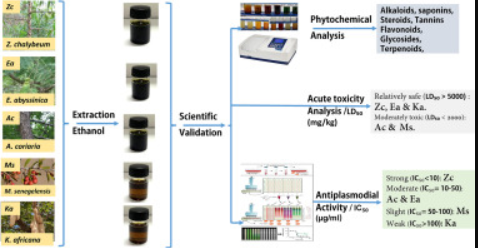
Alkaloids, flavonoids, tannins, and terpenoids were present in all the plant samples in varying quantities. Z. chalybeum was the most potent extract (IC50 0.81–1.28 μg/ml), followed by A. coriaria and E. abyssinica (IC50 10–50 μg/ml). M. senegalensis showed weak activity while K. africana was largely inactive (IC50 > 100 μg/ml). A. coriaria and M. senegalensis showed moderate acute toxicity (LD50 < 2000 mg/kg), while the other extracts showed no severe signs of acute toxicity in Wistar albino rats (LD50 > 2000 mg/kg).
Conclusion
Zanthoxylum chalybeum, Albizia coriaria and Entada abyssinica demonstrated promising antiplasmodial activity that supports their traditional use in management of malaria. However, more efficacy studies using in vivo models, sub-chronic and chronic toxicity studies particularly on A. coriaria and advanced phytochemical profiling are needed to delineate their therapeutic potential before being prioritized for development of standardized herbal remedies and novel antimalarial drugs.