Publications, Standards and Data
Scientific research on Polyscias fulva has demonstrated the plant’s pharmacological properties, including antitumor, antibacterial, and hypoglycemic effects, but there is a paucity of data concerning the phytochemical components responsible for these effects as well as the safety of Polyscias fulva. This study aimed to profile the phytoconstituents in the different solvent fractions of the ethanolic extract of Polyscias fulva stem bark using GC–MS and FTIR analysis, and subsequently evaluate acute and sub-acute toxicity effects in Wistar albino rats. GC–MS analysis identified 19 major phytocompounds. In silico toxicity prediction revealed the potential skin sensitization, eye corrosion, and respiratory toxicity effects of some of the identified compounds. Polyscias fulva ethanolic stem bark extract showed minimum acute toxicity in Wistar albino rats, with an LD50 exceeding 5000 mg/kg. Sub-acute toxicity testing did not show any significant biochemical or hematological toxic effects. However, dose dependent histopathological toxic effects were noted in the lungs with the lower doses (200 and 400 mg/kg) causing mild bronchitis with mononuclear cell infiltration, and the highest dose (800 mg/kg) causing marked peri-bronchiolar and perivascular lymphoid cell accumulation. These findings suggest the presence of pharmacologically active phytochemicals in Polyscias fulva with no major acute toxicity, biochemical or hematological toxic effects, but with lung specific dose-dependent histopathological toxic effects, and predicted skin and eye sensitivity reactions. Further research is needed to identify the specific phytochemicals responsible for its pharmacological activities and potential toxic effects, to inform its safe use in managing human ailments.
This study explored the perception of medical and nursing students and clinical instructors Objective Structured Clinical Examination (OSCE) in five sub-Saharan African health training institutions (Uganda, Malawi, Nigeria, Ghana, Zambia). We used questionnaires among 686 students and 46 clinical instructors, focused group discussions, and key informant interviews to find out their perception. Both students and clinical instructors mostly preferred OSCE because it is fair, organized, and tests real healthcare skills more than the conventional methods like long case. But students said the time on some stations was too short, stressful, and noted challenges during OSCE such as lack of some materials on some stations. Teachers agreed that OSCE is helpful but hard to do due to insufficient staffing and space. Both suggested more practice sessions through Pre OSCE, better training for teachers, and feedback to help students improve. The study confirms that OSCE is the most efficient way to evaluate nursing and medical students, however the study also highlights that a mixed method evaluation would be the best option for evaluation of clinical competence.
Currently, highly active antiretroviral therapy is unable to cure HIV/AIDS because of HIV latency. This study aimed at documenting medicinal plants used in the management of HIV/AIDS in Eastern Uganda so as to identify phytochemicals with HIV latency reversing potential. An ethnobotanical survey was conducted across eight districts in Eastern Uganda. Traditional medicine practitioners were interviewed using semi-structured questionnaires. Qualitative and quantitative phytochemical tests were respectively, performed to determine the presence and quantity of phytochemicals in frequently mentioned plant species. Data were analysed and presented using descriptive statistics and Informant Consensus Factor (ICF). Twenty-one plant species from fourteen plant families were reported to be used in the management of HIV/AIDS. Six plant species with the highest frequency of mention were: Zanthoxylum chalybeum, Gymnosporia senegalensis, Warbugia ugandensis, Leonatis nepetifolia, Croton macrostachyus and Rhoicissus tridentata. Qualitative phytochemical analysis of all the six most frequently mentioned plant species revealed the presence of flavonoids, tannins, terpenoids, alkaloids and phenolics. Quantitative analysis revealed the highest content of flavonoids in L. nepetifolia (20.4 mg/g of dry extract) while the lowest content was determined in C. macrostachyus (7.1 mg/g of dry extract). On the other hand, the highest content of tannins was observed in L. nepetifolia. (199.9 mg/g of dry extract) while the lowest content was found in R. tridentata. (42.6 mg/g of dry extract). Medicinal plants used by traditional medicine practitioners in Eastern Uganda to manage HIV/AIDS are rich in phytochemicals including flavonoids and tannins. Further studies to evaluate the HIV-1 latency reversing ability of these phytochemicals are recommended to discover novel molecules against HIV/AIDS.
Diabetes mellitus (DM) is the fourth leading cause of morbidity and mortality among non-communicable diseases affecting about 422 million people worldwide and an estimated 1.5 million deaths directly attributed to diabetes each year with a prevalence of approximately 4.1% in Uganda. The disease is on an unprecedented rise in developing countries yet access to conventional diabetes medication is a huge challenge due to limited resources. Moreover, the current management and treatment options are life-long, expensive and associated with undesirable side effects. Consequently, there is widespread use of complementary and alternative medicines, mostly herbal medicines in the management of DM in Uganda.
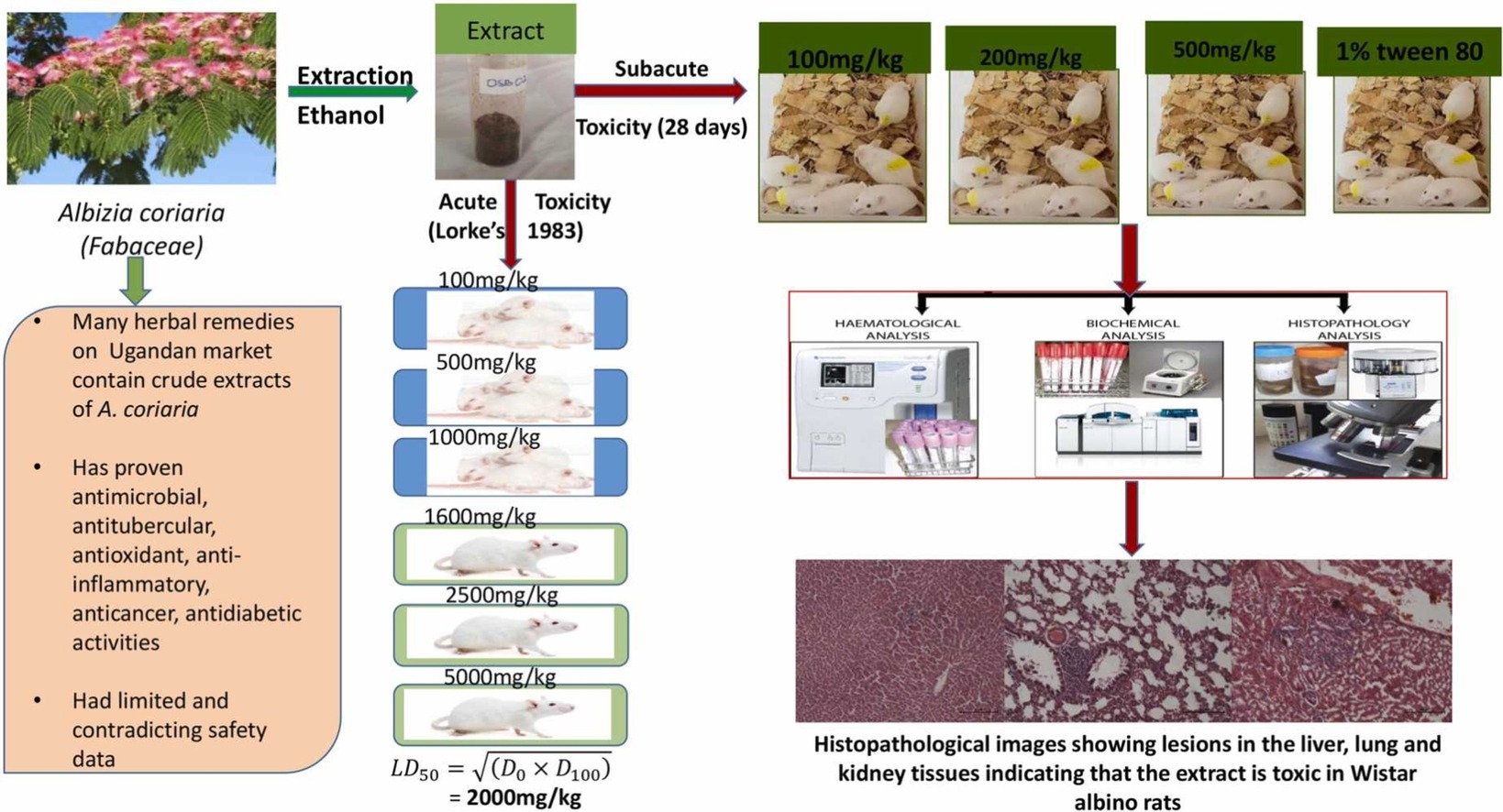
Albizia coriaria (Fabaceae) crude extracts are key ingredients of several licensed and unlicensed herbal products in East Africa. However, there is limited and often contradicting information regarding its toxicity. We therefore evaluated the acute and subacute toxicity of the ethanolic stem bark extract of A. coriaria in mature healthy Wistar albino rats following Lorke’s method and OECD guidelines 407. The LD50 of the ethanolic stem bark extract of A. coriaria was 2000 mg/kg. The acute toxicity signs observed included piloerection, hyperventilation, lethargy, and loss of righting reflex. There was a significant increase in aspartate aminotransferase, alkaline phosphatase, red blood cells and haemoglobin in rats after 28 days at the dose of 500 mg/kg. Histological analyses revealed multifocal random parenchymal necrosis and scattered periportal mononuclear inflammatory cells infiltration in the liver, interstitial nephritis in the kidney and multifocal lymphoid accumulation in the peribronchiolar and perivascular lung tissue at 500 mg/kg. The ethanolic stem bark of A. coriaria was therefore moderately toxic to the rats when administered in a single high oral dose within 24 h. The extract caused a dose dependent toxicity with significant damage to the kidney, liver and lung tissues at a dose of 500 mg/kg after 28 days. Herbal medicines containing A. coriaria extracts should be consumed cautiously due to likelihood of toxicity particularly at higher doses greater than 500 mg/kg.
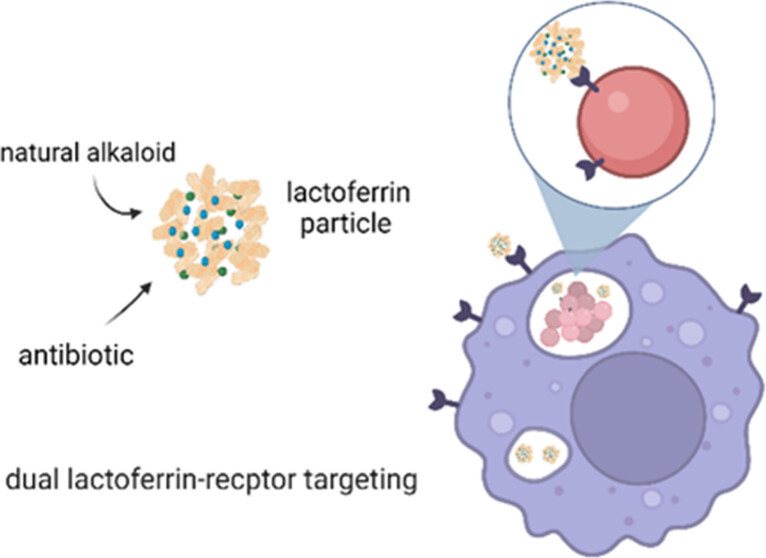
Treatment of microbial infections is becoming daunting because of widespread antimicrobial resistance. The treatment challenge is further exacerbated by the fact that certain infectious bacteria invade and localize within host cells, protecting the bacteria from antimicrobial treatments and the host’s immune response. To survive in the intracellular niche, such bacteria deploy surface receptors similar to host cell receptors to sequester iron, an essential nutrient for their virulence, from host iron-binding proteins, in particular lactoferrin and transferrin. In this context, we aimed to target lactoferrin receptors expressed by macrophages and bacteria; as such, we prepared and characterized lactoferrin nanoparticles (Lf-NPs) loaded with a dual drug combination of antimicrobial natural alkaloids, berberine or sanguinarine, with vancomycin or imipenem. We observed increased uptake of drug-loaded Lf-NPs by differentiated THP-1 cells with up to 90% proportion of fluorescent cells, which decreased to about 60% in the presence of free lactoferrin, demonstrating the targeting ability of Lf-NPs. The encapsulated antibiotic drug cocktail efficiently cleared intracellular Staphylococcus aureus (Newman strain) compared to the free drug combinations. However, the encapsulated drugs and the free drugs alike exhibited a bacteriostatic effect against the hard-to-treat Mycobacterium abscessus (smooth variant). In conclusion, the results of this study demonstrate the potential of lactoferrin nanoparticles for the targeted delivery of antibiotic drug cocktails for the treatment of intracellular bacteria.
Uganda promotes Science and Technology as one of the pillars for socio-economic development and transformation. This is achieved through a number of government agencies and ministries that include Uganda National Council of Science and Technology (UNCST), an agency of the Ministry of Science, Technology and Innovation (MoSTI). UNCST is mandated to facilitate and coordinate the development and implementation of policies and strategies for integrating Science and Technology into the National Development Process as stipulated in articles 4 (d) and 5 (d, e) of the UNCST Act 1990 (Cap 209). These articles specify UNCST’s responsibilities to provide oversight for Research and Development (R&D), through a regulatory framework to promote a conducive environment for growth in research. In pursuit of this role, UNCST has developed and implemented several guidelines to promote ethical conduct of research. The National Guidelines for Use of Animals in Research and Teaching have been developed through extensive review of other existing national and international laws and guidelines such as the Animal (Prevention of Cruelty) Act 1957,the Council for International Organization for Medical Sciences (CIOMS), the International Council for Animal Laboratory Science (ICLAS), Guide for the Care and Use of Laboratory Animals, Terrestrial Animal Health Code 2018 and Aquatic Animal Health Code 2018. The guidelines set forth a framework for which scientists, Institutional Animal Care and Use Committees (IACUCs), facility managers, sponsors and funders, teaching institutions and animal care staff shall consider while planning to use animals in research and teaching in order to maintain the health and welfare of animals.
Background: Whereas the efficacy of Entada abyssinica (fabaceae) extracts against various ailments has been scientifically validated, its safety has not been established. This study was undertaken to evaluate the toxicity effects of methanolic stem bark extract of E. abyssinica on biochemical, haematological and histological parameters of Wistar albino rats following repeated oral administration.
Methods: Wistar albino rats of both sexes were randomized into groups and orally administered daily with determined doses (150, 300 and 600 mg/kg) of E. abyssinica methanolic extract using 1% tween 80 in distilled water as a control for 28 days. On the 29th day, all the animals were sacrificed and dissected to collect blood and selected organs. The serum and whole blood were assayed for biochemical and haematological parameters respectively while selected organs were examined for histopathological lesions. Numerical data was analyzed using graph pad prism and expressed as mean ± standard error of mean. The differences between the treatment and control groups were tested for statistical significance using one-way analysis of variance and/or Student’s t-test.
Results: In repeated daily oral doses (150, 300 and 600 mg/kg), the methanolic stem bark extract of E. abyssinica did not cause significant alteration in majority of the biochemical and hematological indices. However, the extract significantly elevated the level of uric acid (all doses), aspartate aminotransferase (300 and 600 mg/kg), low density lipoproteins (150 mg/kg) and mean corpuscular heamoglobin concentration (all doses). On the other hand, the extracts reduced high density lipoproteins (150 and 300 mg/kg), mean corpuscular volume (all doses), haematocrit (150 and 600 mg/kg), mean platelet volume (150 and 600 mg/kg) and procalcitonin (150 mg/kg). In the vital organs, there were no significant lesions observed except at the highest dose (600 mg/kg) where there was mild evidence of lymphocyte infiltration in the liver and focal interstitial nephritis.
Conclusion: The methanolic stem bark extract of E. abyssinica is relatively safe in Wistar albino rats when repetitively administered orally in small doses for a prolonged period of time. We recommend more chronic toxicity studies and clinical trials on herbal remedies containing this plant to ensure that its use is free of potential toxicity to humans.
Antibiotic resistance is a worldwide public-health challenge that has threatened the health and socio-economic sector of all countries irrespective of their level of income and development. Low- and middle-income countries (LMICs) are more severely affected owing to overstretched health systems and poor access to alternative antibiotic regimens [1], [2]. Although resistance is a natural phenomenon, many anthropogenic factors drive the emergence and spread of resistant pathogens. Among these is the unnecessary and inappropriate prescription of antibiotics [3]. Antibiotic misuse is a particular problem in primary care. Approximately 90% of all antibiotic prescriptions are issued by general practitioners, and respiratory tract infections are the leading reason for antibiotic prescribing [4].
Healthcare professionals prescribe antibiotics for either prophylactic or therapeutic reasons. But the decision of when and what to prescribe leaves room for unnecessary use of antibiotics that often drives resistance [5], [6], [7]. Prescription practices are influenced by several factors such as level of education, years of experience, availability of drugs and laboratories, availability of treatment guidelines, patient load and motivation, among others [8], [9]. However, there is a paucity of evidence in LMIC settings regarding the experiences and practices of healthcare professionals who prescribe and dispense antimicrobial agents [10].
Diabetes mellitus (DM) is a chronic metabolic disorder associated with various complications and comorbidities such as peripheral vascular disease, coronary artery disease, hypertension, metabolic syndrome among others. By 2016, over 463 million people were diagnosed to have DM globally and in Uganda the prevalence was at 2.7% [1]. It was predicted that by 2035, the prevalence of DM in Uganda and many developing countries would have doubled [2]. The International Diabetes Federation (IDF) estimated that the number of people with DM in Africa will increase from 14.2 million in 2015 to about 34.2 million in 2040.This would translate to an increase in the global expenditure from the current $673 billion to about $802 billion assuming constant per capita healthcare expenditures [3]. The use of anti-diabetics and other drugs is an integral component in the management of DM and its associated comorbidities in many health care systems. However, the total availability of most anti-diabetic and anti-hypertensive drugs is usually low, especially in primary hospitals and in the absence of health insurance reimbursement in developing countries [4].
The WHO recommends that medicines are appropriately prescribed and dispensed while being used during diagnosis, prevention and treatment of diseases and this is what is referred to as “rational drug use”. Irrational prescription practices such as polypharmacy, over prescription of injectable and antibiotics, prescription of medicines outside the essential medicine list and not following standard treatment guidelines are common among health care systems in developing countries [10]. Inappropriate drug prescribing and dispensing is responsible for more than 50% wastage in expenditure on essential medicines. Irrationally prescribed drugs do not only increase patient and government expenditures but also may result into drug toxicities. Therefore, we undertook this study to evaluate the appropriateness and affordability of prescriptions for diabetic patients attending the medical special clinic at Mbale regional referral hospital, the largest public tertiary hospital in Eastern Uganda.